 Pin It
 One October afternoon, my kitchen filled with the smell of roasting squash and I realized I'd been standing there for ten minutes just breathing it in, completely mesmerized. That's when this soup became less about following a recipe and more about discovering how two humble vegetables could transform into something so velvety and comforting. The golden-brown edges catching the oven light, the way the broccoli turned almost caramelized—it felt like uncovering a secret the vegetables had been keeping all along.
I made this for my sister when she was going through a phase of trying to eat more vegetables, and I watched her face change with that first spoonful. She set down her spoon, looked at the bowl, then back at me with this surprised expression like she'd expected something virtuous and gotten something delicious instead. That's when I knew this recipe had staying power—it doesn't ask you to choose between nourishing yourself and actually enjoying what's on your plate.
Ingredients
- Butternut squash (1 medium, about 2 lbs): Choose one that feels heavy for its size and has a deep golden-orange skin—those tend to be sweeter and less watery when roasted.
- Broccoli (1 large head, about 4 cups florets): Cut your pieces fairly uniform so everything roasts at the same pace, and don't skip the stems if they're tender enough.
- Yellow onion (1 medium, chopped): The onion becomes almost transparent and sweet during roasting, which is the backbone of the soup's natural flavor depth.
- Garlic (3 cloves): Leave it whole during roasting and it'll turn soft and almost nutty rather than sharp and biting.
- Vegetable broth (4 cups): Use a broth you actually like tasting on its own—it matters more than you'd think in a soup this simple.
- Coconut milk or heavy cream (1 cup): Coconut milk keeps things vegan and adds a subtle earthiness, while cream makes it richer; either one changes the personality of the soup slightly.
- Olive oil (2 tablespoons): This is your roasting hero—don't skimp here because it's what creates those golden, caramelized edges.
- Kosher salt, black pepper, ground cumin, ground nutmeg: The cumin on the roasted vegetables adds warmth, while the nutmeg stirred in at the end whispers rather than shouts.
Tired of Takeout? 🥡
Get 10 meals you can make faster than delivery arrives. Seriously.
One email. No spam. Unsubscribe anytime.
Instructions
- Heat your oven and prep your pan:
- Get that oven to 425°F and line your baking sheet with parchment paper so cleanup becomes someone else's problem later. This temperature is hot enough to coax the vegetables into browning without drying them out.
- Arrange and season your vegetables:
- Spread everything out in a single layer—squash cubes, broccoli florets, chopped onion, and whole garlic cloves. Drizzle with olive oil, then sprinkle salt, pepper, and cumin over everything and toss with your hands until every piece is glistening and coated.
- Roast until golden and tender:
- Pop it in the oven for 25 to 30 minutes, stirring halfway through so nothing sticks or chars too aggressively. You're looking for deep golden-brown edges and vegetables that yield easily when you poke them with a fork.
- Simmer to marry the flavors:
- Scrape all the roasted vegetables into a large pot, add your vegetable broth, and bring it to a gentle simmer over medium heat. Let it bubble quietly for about 10 minutes so the roasted flavors have time to really get to know each other.
- Blend until silky:
- This is where immersion blenders shine—use yours right in the pot, moving it around until you've got something smooth and creamy. If you're using a countertop blender instead, work in batches and be careful with the hot liquid, letting a little steam escape before you blend each batch.
- Finish and season:
- Turn off the heat, stir in your coconut milk or cream and that pinch of nutmeg, then taste it. Add more salt if needed, remembering that it should taste vibrant and balanced, not one-dimensional.
- Serve with intention:
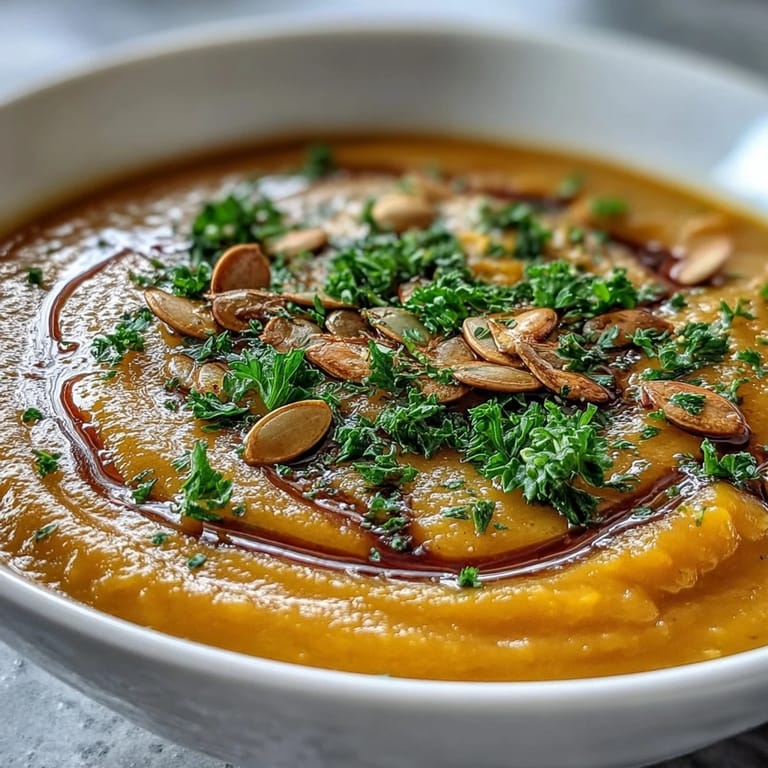
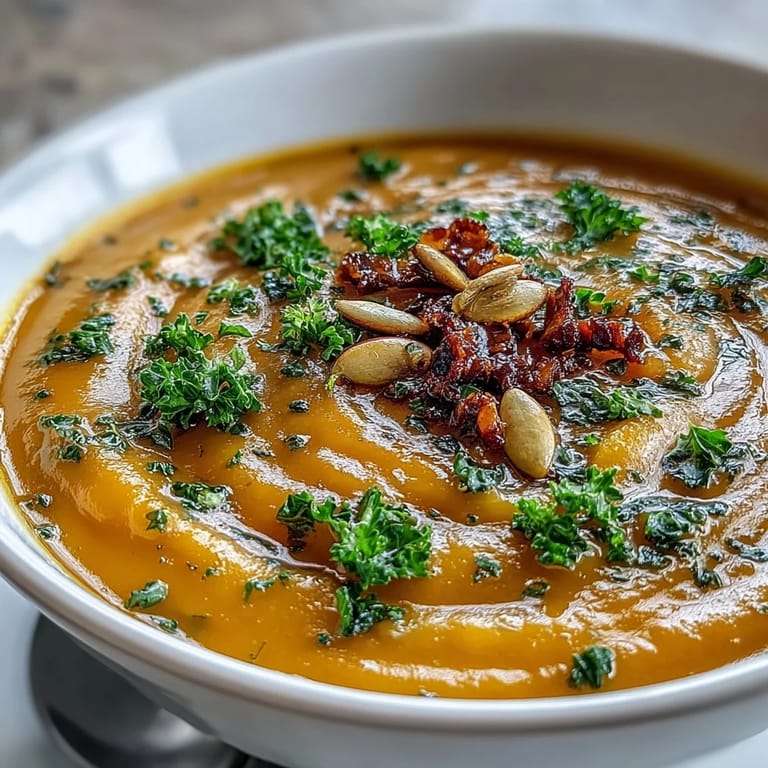
- Reheat gently if it's cooled, then ladle into bowls and top with toasted pumpkin seeds, fresh parsley, and another small drizzle of cream if you want to be fancy about it.
 Pin It
 What strikes me most about this soup is how it proves that eating well doesn't require complicated ingredient lists or techniques that make you nervous. It's the kind of meal that makes you feel nourished in a way that goes beyond just calories and nutrients.
The Magic of Roasting
There's something almost alchemical about what happens to vegetables in a hot oven. The sugars caramelize, the edges char slightly, and everything becomes more intensely itself—sweeter, deeper, more interesting than it would be if you just simmered it in broth. This soup works because roasting happens first, which means you're starting with flavor that's already been concentrated and transformed rather than trying to build it from scratch.
Texture and Cream
The creaminess here comes from blending the vegetables themselves, not just from pouring in cream, which means the soup has body and richness even if you use coconut milk instead. That said, the choice between cream and coconut milk changes things subtly—cream makes it taste like a classic French soup, while coconut milk gives it an almost Asian-inspired undertone. Either way, you're ending up with something silky that feels like an indulgence rather than a health food pretending to be one.
Variations and Improvisations
Once you understand how this soup works, you can play with it. A pinch of cayenne adds a quiet heat that doesn't announce itself loudly but makes everything taste more alert. A squeeze of fresh lemon at the end brings brightness, cutting through the richness just enough. The recipe is sturdy enough to handle your mood and your pantry.
- If you can't find butternut squash, sweet potato or even regular pumpkin work beautifully and roast in about the same time.
- Swap the broccoli for cauliflower if that's what you have, or use a combination of both for more complexity.
- Serve it with crusty bread, a grilled cheese sandwich, or just on its own with a good salad alongside.
 Pin It
 This soup has become my answer when someone asks what I'm making for dinner and I want something that feels both nourishing and luxurious. It's the kind of recipe that reminds you that simple cooking, done with attention, is its own kind of magic.
Your Questions Answered
- → Can I make this soup ahead of time?
Yes, this soup keeps well in the refrigerator for up to 4 days. Store in an airtight container and reheat gently on the stovetop, adding a splash of broth if needed to adjust consistency.
- → What can I use instead of coconut milk?
Heavy cream works beautifully for a richer flavor, or try cashew cream for a nut-based alternative. For a lighter option, use additional vegetable broth or unsweetened almond milk.
- → How do I get the smoothest texture?
Ensure vegetables are roasted until very tender, then blend thoroughly. An immersion blender works well, but a countertop blender creates an even silkier consistency. Blend in batches if needed and be careful with hot liquids.
- → Can I freeze this soup?
Absolutely. Cool completely, then freeze in portions for up to 3 months. Thaw overnight in the refrigerator and reheat gently, stirring occasionally. The texture may separate slightly but will come together when stirred.
- → What vegetables can I substitute?
Sweet potato works wonderfully in place of butternut squash, and cauliflower can replace broccoli. You can also add carrots or parsnips for additional depth and sweetness.
- → How can I add more protein?
Stir in cooked white beans or chickpeas before blending for added protein and fiber. You can also top with roasted chickpeas or serve alongside a grain bowl for a more substantial meal.