 Pin It
 There's something almost magical about the smell of tomatoes blistering in a hot oven—it fills your kitchen with this concentrated warmth that makes you forget you're making soup and not something far more elaborate. I discovered this particular version on a rainy afternoon when my farmer's market haul included the most stunning heirloom tomatoes, and I'd somehow convinced myself they needed to be roasted rather than eaten raw. What emerged was silky, deeply flavored, and so much more interesting than I'd expected, which is probably why I've made it dozens of times since.
I made this for my mom when she was recovering from being ill, and she actually asked for a second bowl, which never happens. The way she closed her eyes after the first spoonful told me everything—sometimes food is the best way to say I'm thinking about you without using any words at all.
Ingredients
- Ripe tomatoes (1.5 kg or 3.3 lbs), halved: Use the ripest, most fragrant tomatoes you can find; their sweetness becomes concentrated and almost caramelized during roasting, which is the whole point.
- Yellow onion (1 large), quartered: Yellow onions soften into creamy sweetness when roasted, adding body and depth without any sharp bite.
- Garlic cloves (6), peeled: Roasting mellows garlic into something almost candy-like, so don't be shy with it.
- Extra-virgin olive oil (2 tbsp): Good olive oil here means something; use one you'd actually taste on bread, as it becomes part of the flavor profile.
- Kosher salt (1 tsp) and freshly ground black pepper (1/2 tsp): Season the vegetables before roasting so they develop flavor from the inside out, not just on the surface.
- Vegetable broth (2 cups), low sodium: Low sodium broth lets the roasted vegetables shine without getting lost in salt noise.
- Fresh basil leaves (1/2 cup, packed): Add this after cooking to preserve that bright, peppery basil taste that makes people say it tastes like summer.
- Unsalted butter (1 tbsp, optional): A small knob makes the soup feel luxurious and helps cream dissolve into it more beautifully.
- Sugar (1 tsp, optional): Just a whisper to balance any acidity from the tomatoes; taste first, add only if needed.
- Heavy cream or crème fraîche (1/4 cup, optional) for garnish: A swirl on top is less about richness and more about contrast—it cools each spoonful just slightly.
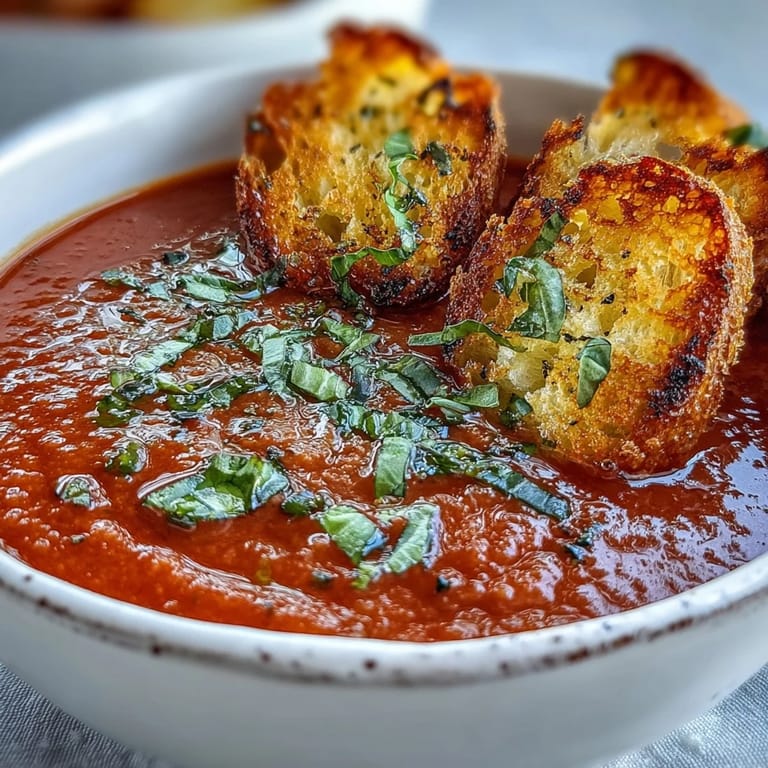
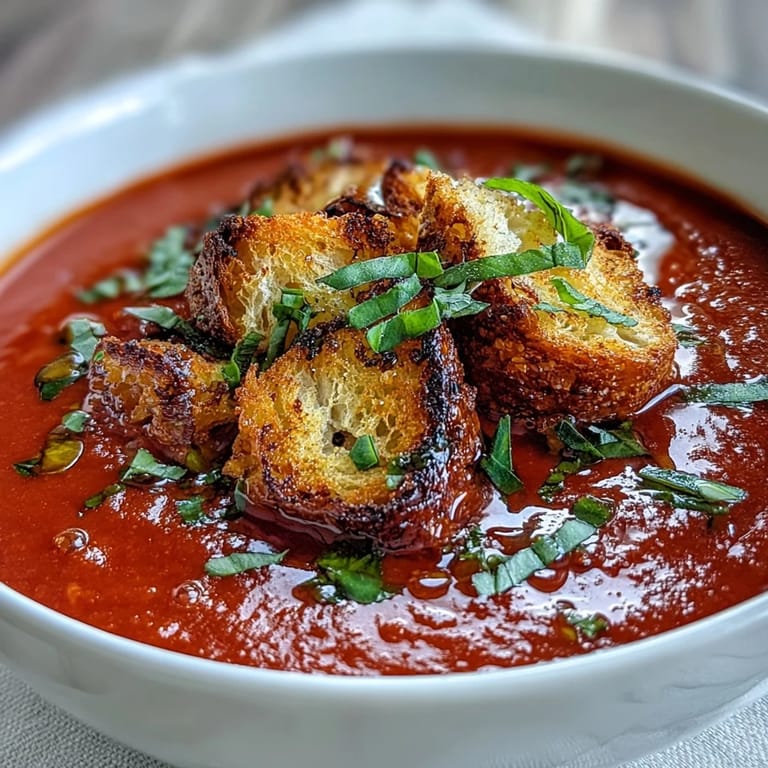
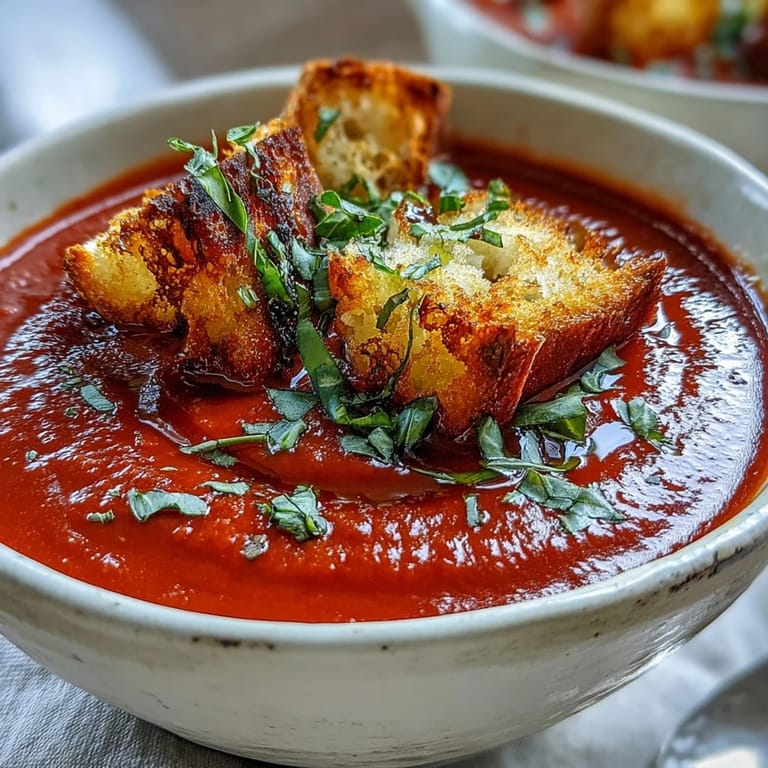
- Fresh basil leaves and croutons or toasted bread for garnish: These aren't decorative; they're textural interruptions that keep each spoonful interesting.
Tired of Takeout? 🥡
Get 10 meals you can make faster than delivery arrives. Seriously.
One email. No spam. Unsubscribe anytime.
Instructions
- Heat your oven and prep:
- Set the oven to 220°C (425°F) and line a baking sheet with parchment paper so nothing sticks and cleanup is practically nonexistent. This temperature is hot enough to caramelize but not so hot that things burn before they soften.
- Arrange and season the vegetables:
- Scatter your tomato halves, onion quarters, and garlic cloves on the sheet, then drizzle everything with olive oil and sprinkle with salt and pepper. Toss it all so every surface gets coated, because the oil is what makes them caramelize.
- Roast until golden and tender:
- Slide the pan into the oven for 35 to 40 minutes, checking around the 30-minute mark—you're looking for the tomato edges to brown and the onions to turn almost translucent. The kitchen will smell incredible, which is your cue that things are happening.
- Transfer and add broth:
- Scrape everything into a large pot, making sure to get all those flavorful browned bits and any juices clinging to the pan. Pour in the vegetable broth and set it over medium heat until it's gently steaming and starting to bubble at the edges.
- Stir in basil and optional enrichments:
- Add your fresh basil, butter if using it, and that optional sugar, then let everything simmer together for about 5 minutes so the flavors get friendly with each other. You'll notice the basil turning darker and the smell becoming more herbal and less tomato-forward.
- Blend until silky:
- Using an immersion blender, puree the soup in the pot with long, careful strokes until it's completely smooth and almost velvety. If you're using a countertop blender instead, work in batches and be patient—hot soup doesn't appreciate being overfilled.
- Taste and adjust:
- Have a spoonful and decide if it needs more salt, a pinch of pepper, or that optional sugar if acidity is bothering you. If you want an even silkier texture, pour everything through a fine sieve, though honestly I usually skip this step.
- Serve with care:
- Ladle the soup into bowls while it's still steaming, then add a small drizzle of cream, a few fresh basil leaves, and some croutons or toasted bread if you want texture. Serve immediately and watch people soften a little as they eat.
 Pin It
 My neighbor tasted this soup once and asked if I'd made it at a restaurant and brought it home—I'm still not sure if she believed me when I said it was just tomatoes and time. That moment made me realize that sometimes the simplest things, when you pay attention to them, become the things people remember.
Why Roasting Changes Everything
Raw tomatoes are bright and sharp, but roasted tomatoes become something else entirely—their natural sugars concentrate and caramelize, creating this deeper sweetness that tastes almost jammy. The edges brown slightly, which adds a subtle smokiness that no amount of seasoning could replicate. When you add the roasted garlic and onions into the mix, they're all speaking the same warm, caramelized language, and that's why the final soup tastes so complete.
The Magic of Fresh Basil Timing
There's a window where basil is perfect—green, peppery, almost alive—and it closes quickly if you add it too early. I learned this the hard way by tossing a handful into the roasting pan, watching it turn black, and ending up with a soup that tasted more like dried herbs than fresh ones. Now I treat basil like a final note in a song, something that comes right at the end to make people lean back and say it tastes like something they can't quite name but absolutely love.
Making It Your Own
This recipe is a foundation, not a rulebook, so feel free to shift things around based on what you have and what you're craving. A splash of balsamic vinegar before blending adds complexity, red pepper flakes add a gentle heat that surprises people, and a teaspoon of tomato paste deepens everything if your tomatoes weren't quite as flavorful as you'd hoped. For a vegan version, simply skip the butter and cream or use their plant-based cousins—the soup doesn't actually need them to be delicious, they just add softness and luxury.
- If your tomatoes are on the acidic side, that pinch of sugar really does balance them without making anything taste sweet.
- Leftovers stay fresh in the refrigerator for up to three days, and they reheat gently on the stove with a splash of broth if they've thickened.
- Freeze this soup in portions for up to three months, though the cream should be added fresh after thawing.
 Pin It
 This soup has become one of those dishes I make when I want to feel like I'm taking care of myself or the people around me without fussing too much. It's the kind of meal that tastes like you've done something special when really you've just let an oven and some good ingredients do most of the work.
Your Questions Answered
- → Can I make this soup ahead of time?
Yes, this soup stores beautifully for up to 4 days in the refrigerator. Reheat gently on the stovetop and add the cream garnish just before serving for the best texture and presentation.
- → What type of tomatoes work best?
Ripe, in-season tomatoes provide the best flavor. Roma or plum tomatoes work excellently due to their meaty texture and lower water content. If fresh tomatoes aren't available, use high-quality canned whole tomatoes as a substitute.
- → How can I make this soup vegan?
Simply omit the butter and heavy cream, or substitute with plant-based alternatives like vegan butter and coconut cream or cashew cream. The soup will still be rich and flavorful with just olive oil and the roasted vegetables.
- → Can I freeze this soup?
Absolutely. Cool the soup completely, then store in airtight containers for up to 3 months. Thaw overnight in the refrigerator and reheat gently. Add fresh cream and basil after reheating for optimal taste.
- → Why roast the vegetables instead of cooking them in the pot?
Roasting caramelizes the natural sugars in tomatoes and onions, creating deeper, more complex flavors with subtle sweetness. This technique adds a smoky, concentrated taste that simmering alone cannot achieve.
- → What can I serve with this soup?
This soup pairs beautifully with crusty Italian bread, grilled cheese sandwiches, or a fresh green salad. For wine pairing, try a crisp Sauvignon Blanc or Pinot Grigio to complement the bright tomato and basil flavors.