 Pin It
 The first time I watched a street vendor twist dough into those perfect shapes at a German Christmas market, my gloves kept falling off while I reached for my warm pretzel. That memory still surfaces whenever the smell of baking bread fills my kitchen in winter. Something about the combination of steam rising from a paper bag and coarse salt sticking to your fingers feels like pure comfort.
Last winter my youngest claimed she could twist faster than me, so we had a pretzel shaping competition at the counter. Mine won on symmetry but hers definitely had more character, with one particularly lopsided creation we named The Funky Twister. That pretzel disappeared first, mostly because she kept insisting it was the most delicious one.
Ingredients
- Bread flour: The higher protein content here is what gives pretzels their signature chew and structure
- Warm water: Keep it around 110°F—too hot and the yeast dies, too cool and nothing happens
- Active dry yeast: One packet works perfectly, no need to measure from a jar
- Granulated sugar: Feeds the yeast and helps the crust develop that gorgeous deep brown color
- Kosher salt: Use this in the dough itself for balanced flavor throughout
- Unsalted butter: Melted and added warm, this keeps the dough tender and adds richness
- Baking soda: The magic ingredient that creates that authentic pretzel crust when boiled
- Egg yolk: Beaten with water, this wash gives the pretzels their shiny, golden finish
- Coarse pretzel salt: The bigger crystals here are what make each bite satisfyingly salty
Tired of Takeout? 🥡
Get 10 meals you can make faster than delivery arrives. Seriously.
One email. No spam. Unsubscribe anytime.
Instructions
- Wake up the yeast:
- Stir together your warm water, sugar, and yeast in a large bowl and walk away for exactly five minutes until you see a foamy layer on top
- Build the dough:
- Pour in the melted butter and salt, then add flour one cup at a time until the dough pulls away from the sides of the bowl
- Knead until smooth:
- Turn the shaggy dough onto a floured surface and work it for five to seven minutes until it feels elastic and smooth like a new stress ball
- Let it rise:
- Place your dough in a lightly oiled bowl, cover it, and tuck it somewhere warm for an hour until it doubles in size
- Heat everything up:
- Preheat your oven to 450°F and line two baking sheets while you bring ten cups of water to a boil with the baking soda
- Shape your pretzels:
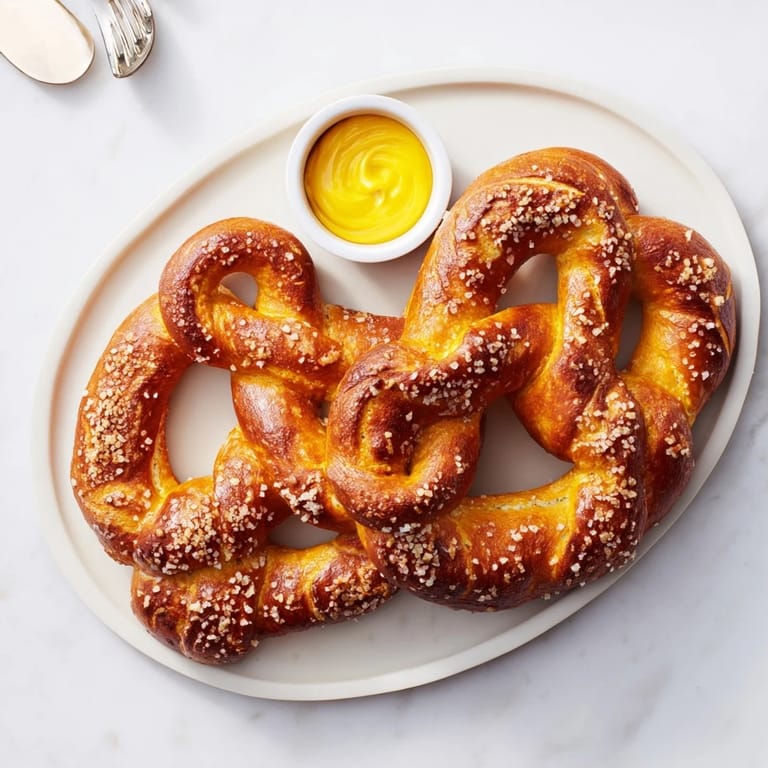
- Divide the dough into eight pieces, roll each into a twenty inch rope, form a U shape, twist the ends twice, then fold them over to create that classic pretzel form
- The boiling bath:
- Carefully lower each pretzel into the bubbling baking soda water for thirty seconds, then lift them out with a slotted spatula and arrange on your prepared pans
- Add the finish:
- Brush each pretzel with your egg wash and shake on that coarse salt while they are still damp so it sticks perfectly
- Bake until golden:
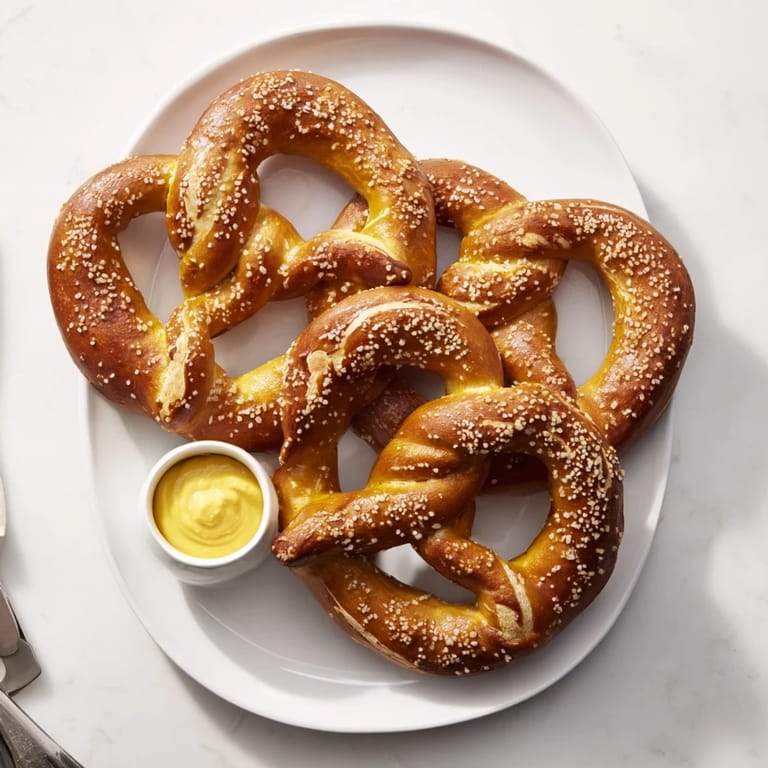
- Slide the trays into the hot oven for twelve to fifteen minutes until the pretzels turn a deep, glossy brown that makes your whole kitchen smell like a bakery
 Pin It
 My friend Mark brought these to a Super Bowl party years ago, and honestly nobody touched the wings until the pretzels were gone. He served them with three different mustards and suddenly everyone was debating which condiment pairing deserved its own category on a restaurant menu.
Mastering The Twist
The trick to shaping pretzels is rolling your dough rope evenly from the center outward instead of starting at one end and rolling down. I learned this after making several pretzels that were thick on one side and comically thin on the other. Keep your hands light and let the dough relax if it springs back while you are working with it.
That Baking Soda Bath Science
The alkaline water changes the surface chemistry of the dough, creating that distinctive pretzel flavor and deep browning reaction in the oven. It is the same principle that makes bagels different from regular bread. The thirty second dip is perfect—longer and your pretzels start tasting strangely metallic, shorter and you lose that signature chewy crust.
Serving Ideas Beyond Mustard
These pretzels are fantastic warm but also reheat beautifully the next day in a 350°F oven for about five minutes. My kids now request pretzel bites for their lunchboxes, so sometimes I cut the ropes into smaller pieces before boiling and bake them as miniature versions.
- Try brushing baked pretzels with melted butter and cinnamon sugar for a sweet variation
- Sesame seeds, poppy seeds, or everything bagel seasoning work beautifully as alternative toppings
- Homemade cheese sauce takes these from snack to dinner when paired with a simple salad
 Pin It
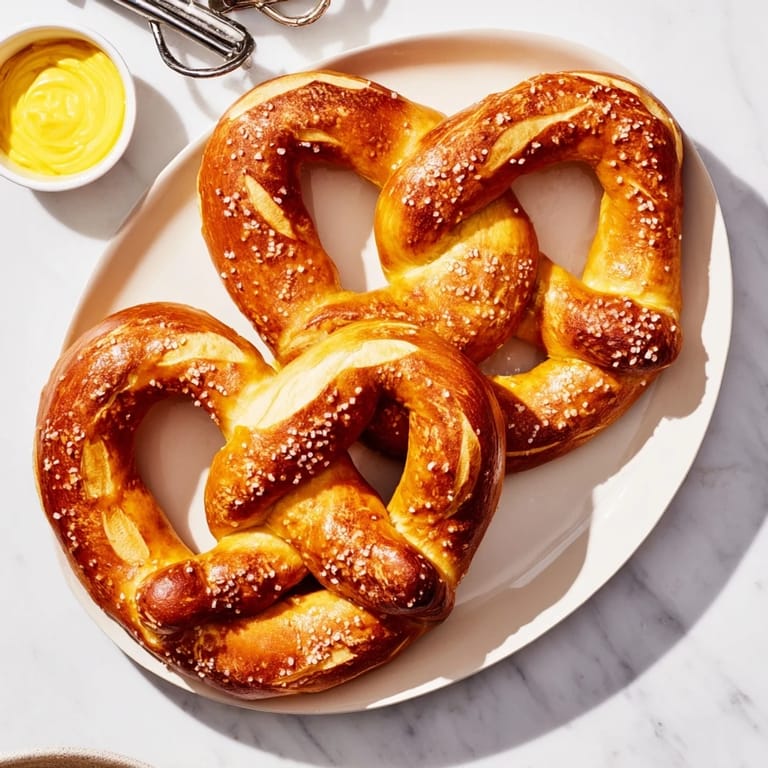
 There is something profoundly satisfying about pulling a tray of these from the oven, seeing that deep golden color, and knowing you made something that people usually only buy at markets or stadiums.
Your Questions Answered
- → Why do pretzels need a baking soda bath?
The baking soda bath creates that distinctive pretzel flavor and deep golden-brown color. The alkaline solution gelatinizes the dough's surface, producing the characteristic chewy, shiny crust that sets pretzels apart from other breads.
- → Can I make these pretzels without a stand mixer?
Absolutely. Knead by hand on a floured surface for 5-7 minutes until smooth and elastic. The dough is forgiving and easily worked by hand—many traditional bakers prefer the tactile feedback of manual kneading.
- → How do I store leftover pretzels?
Store in an airtight container at room temperature for up to 2 days. For longer storage, freeze individually wrapped and reheat in a 350°F oven for 5-7 minutes to restore crispness.
- → What's the best way to shape pretzels?
Roll dough into a 20-22 inch rope, form a U shape, cross the ends twice, then fold them down and press onto the bottom curve. Practice makes perfect—even irregular shapes taste delicious.
- → Can I substitute the egg wash?
For a vegan option, brush with plant milk or olive oil. The egg wash provides richer color and better salt adhesion, but alternatives work in a pinch.
- → Why did my dough not double in size?
Ensure water is warm (110°F), not hot, which can kill yeast. Find a draft-free, warm spot for rising. Cold environments slow fermentation—try placing the bowl near a preheating oven.