 Pin It
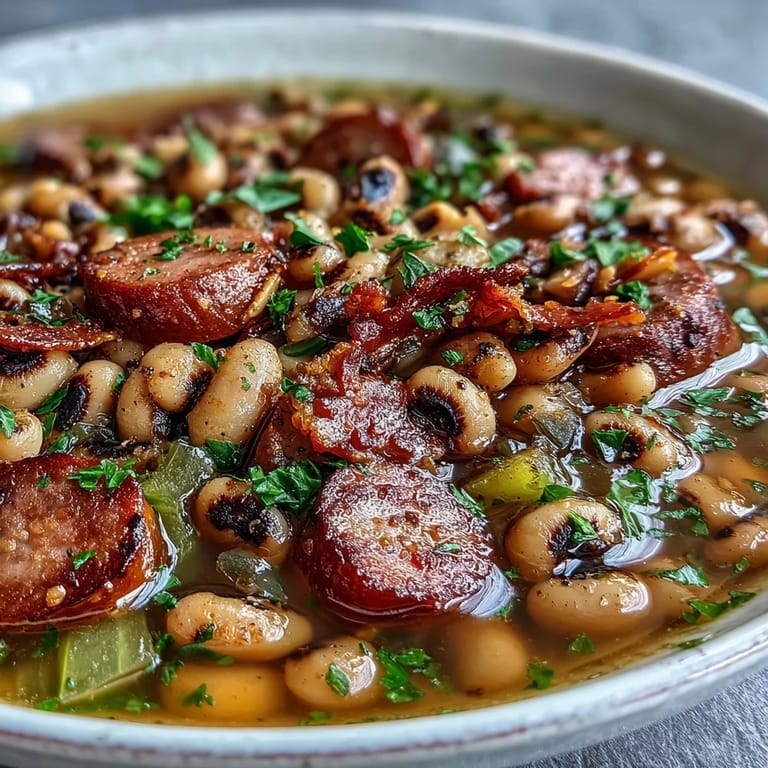
 My grandmother used to say that black-eyed peas on New Year's Day weren't just tradition—they were insurance. She'd stir that pot with such intention, like she was stirring in luck itself, and the kitchen would fill with this smoky, savory warmth that made you believe her. Years later, I understood it wasn't magic in the pot; it was the care she took building those flavors, layer by layer, letting the sausage and bacon render into the broth until everything tasted like comfort and possibility. This version honors that approach—nothing fancy, just honest Southern cooking that tastes like it's been simmering in someone's kitchen for generations.
I made this for the first time on a gray January afternoon when my kitchen felt too quiet and I needed something to do with my hands. By the time the peas had been simmering for forty minutes, the whole apartment smelled incredible—bacon fat, sausage smoke, the earthiness of the peas themselves—and suddenly I had five people asking if they could stay for dinner. That's when I learned this dish has a quiet power: it draws people in and makes them feel looked after.
Ingredients
- Smoked sausage (Andouille or Kielbasa), 225 g sliced: This is your backbone—the smokiness seasons the entire pot and gives the broth its signature depth; don't skip the smoked variety or substitute with regular pork sausage.
- Thick-cut bacon, 115 g diced: The rendered fat becomes your cooking medium and adds a savory complexity that regular oil simply can't match.
- Dried black-eyed peas, 450 g rinsed and sorted: Always sort through dried peas for stones or shriveled ones; this takes two minutes and saves your teeth, and soaking them overnight shortens cooking time significantly.
- Large onion, 1 diced: Onion is your flavor foundation—don't rush the sauté, let it turn translucent and slightly golden for maximum sweetness.
- Green bell pepper, 1 diced: This adds brightness and prevents the dish from tasting one-note; it's the counterpoint to all that smoke.
- Celery stalks, 2 diced: Celery might seem like background music, but it's essential to the holy trinity that defines Southern cooking.
- Garlic cloves, 3 minced: Fresh garlic matters here because you're adding it near the end; garlic powder would taste stale by comparison after long simmering.
- Low-sodium chicken broth, 1.5 liters: Low-sodium lets you control the salt and taste the actual peas; high-sodium broth will overshadow everything else.
- Water, 240 ml: This dilutes the broth slightly so the peas don't get oversalted as they absorb liquid.
- Bay leaves, 2: Bay leaves add a subtle floral note; remove them before serving or your guests will find one and remember it.
- Smoked paprika, 1 tsp: This is non-negotiable—it echoes the sausage smoke and makes the broth glow with color.
- Dried thyme, 1/2 tsp: Thyme is gentle and herbaceous; it seasons without announcing itself.
- Cayenne pepper, 1/2 tsp optional: Add this only if you want heat; the dish is perfectly satisfying without it, but some people love the kick.
- Freshly ground black pepper, 1/2 tsp: Ground fresh tastes brighter than pre-ground; this small detail matters.
- Kosher salt, 3/4 tsp plus more to taste: Kosher salt's larger crystals dissolve evenly; start with less and taste at the end because the sausage and bacon contribute salt too.
- Fresh parsley, 2 tbsp chopped: Parsley is your final brightness, your reminder that this is food made with intention.
- Hot sauce to serve: Have it on the table for people who want to customize their heat level.
Tired of Takeout? 🥡
Get 10 meals you can make faster than delivery arrives. Seriously.
One email. No spam. Unsubscribe anytime.
Instructions
- Prepare your peas ahead:
- The night before, place your rinsed peas in a bowl and cover them generously with cold water. If you're short on time, use the quick method: pour boiling water over the peas, let them sit for an hour while you do other things, then drain and rinse. Either way, this softens their skin slightly so they cook evenly and don't burst.
- Render the bacon until it sings:
- Cut your bacon into small pieces and set them into a large Dutch oven or heavy pot over medium heat. Listen for the gentle crackling and watch until the pieces are deeply golden and crisp, which takes about 8-10 minutes. Use a slotted spoon to fish them out onto a paper towel, leaving that precious rendered fat behind.
- Brown the sausage in bacon fat:
- Slice your sausage into rounds and add it to the pot with all that bacon fat still clinging to the bottom. Let it sit for a minute before stirring—this creates a light brown crust that locks in flavor. You want the sausage browned but not cooked through; it will finish cooking in the broth.
- Build your aromatic base:
- Add your diced onion, bell pepper, and celery to the pot—this is the holy trinity of Southern cooking. Sauté for about 5-6 minutes, stirring occasionally, until the onion softens and the pepper starts to release its sweetness. Then add your minced garlic and cook for just one more minute; garlic burns quickly, so don't walk away.
- Combine everything and bring to the boil:
- Pour in your drained peas, chicken broth, and water. Add the bay leaves, smoked paprika, thyme, cayenne if you're using it, black pepper, and salt. Return the bacon and sausage to the pot and give everything a good stir so the spices distribute evenly. Turn the heat up to medium-high and let it come to a rolling boil; you'll see the peas bob to the surface.
- Simmer low and slow until tender:
- Once it reaches a boil, cover the pot, turn the heat down to low, and let it simmer for 1 to 1.5 hours. The exact time depends on how old your dried peas are and how hard your water is; start checking around 45 minutes. The peas are done when they're creamy inside but still hold their shape, and the broth has taken on a deep, rich color.
- Taste, adjust, and finish:
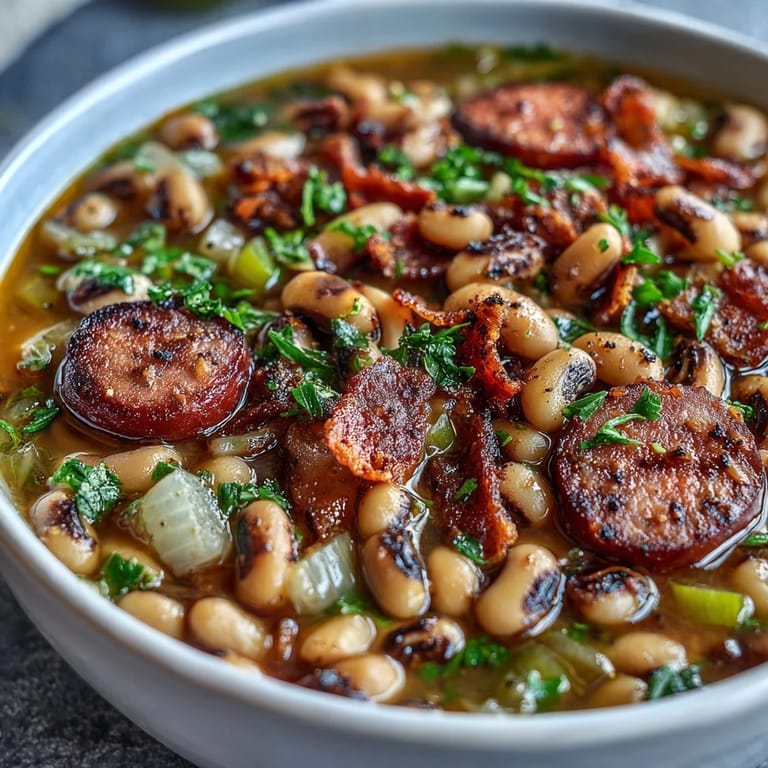
- Fish out those bay leaves and taste the broth. It should taste savory and slightly smoky; if it tastes thin, let it simmer uncovered for another 10 minutes to concentrate the flavors. Add more salt if needed, remembering that it will taste less salty once it cools slightly. Sprinkle fresh parsley over the top right before serving.
 Pin It
 Last New Year's, I made this dish for my neighbor who had just lost her husband. She sat at my kitchen table while it simmered, and the smell seemed to do something—reminded her of his mother's kitchen in Louisiana, reminded her that people still cooked with care. She took a bowl home and texted the next day that she'd eaten it three times already. That's when I understood these aren't just beans.
Soaking: The Non-Negotiable Step
I used to think soaking was optional, a suggestion for people with time to spare. Then I made these without soaking and stood in my kitchen watching the pot for nearly two hours while the peas stubbornly refused to soften. Overnight soaking hydrates the peas evenly, softens their skins, and cuts cooking time roughly in half—it's not fussy, it's physics. Even the quick-soak method (boiling water, one hour) makes a noticeable difference in both texture and cooking time.
The Holy Trinity and Why It Matters
Southern cooking isn't fancy; it's built on the foundation of onion, bell pepper, and celery sautéed together in fat. This combination, called the holy trinity, appears in jambalaya, gumbo, and red beans—it's the flavor vocabulary of the region. Don't skip any of them or substitute one for something else; together they create a depth that none of them could achieve alone. When you sauté them slowly in bacon fat, they become sweeter and more aromatic, which seasons everything that comes after.
Making It Your Own
This recipe is a template, not a rulebook. I've added diced tomatoes on nights when I wanted brightness, collard greens when I wanted more vegetables, and once I added a tablespoon of molasses because I was curious and it deepened the sweetness beautifully. The meat can be adjusted too—less sausage if you prefer, or extra bacon if that's your preference. For a vegetarian version, use vegetable broth and add a teaspoon of liquid smoke to recapture that character you lose without the meat.
- Collard greens, tomatoes, or even okra can be added in the last 20 minutes of cooking without disrupting the base.
- A splash of apple cider vinegar or hot sauce stirred in at the end adds complexity and prevents the dish from tasting one-dimensional.
- Leftover peas reheat beautifully and taste even better the next day as the flavors marry together.
 Pin It
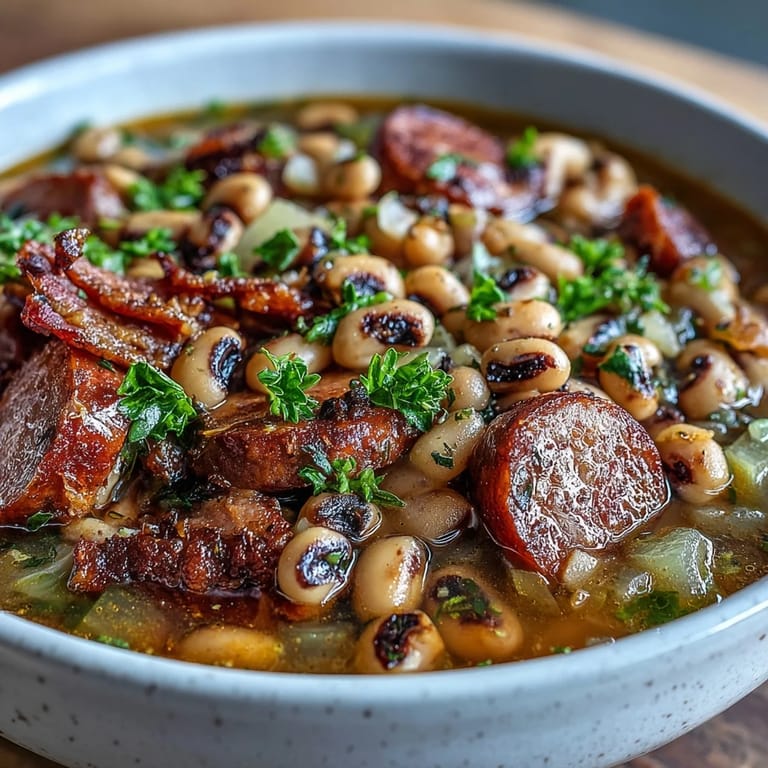
 This dish teaches you something each time you make it: patience, the power of small, careful steps, and how feeding people well is one of the most honest things you can do. Make it once and you'll understand why it's been cooked in Southern kitchens for generations.
Your Questions Answered
- → Do I need to soak dried black-eyed peas before cooking?
Yes, soaking dried black-eyed peas overnight helps them cook evenly and reduces simmering time. Alternatively, use the quick-soak method by covering peas with boiling water for one hour before draining and proceeding with the recipe.
- → Can I make this vegetarian?
Absolutely. Omit the bacon and sausage, then substitute vegetable broth for chicken broth. Add extra smoked paprika or a few drops of liquid smoke to maintain the smoky depth that meats typically provide.
- → What goes well with black-eyed peas?
Traditional pairings include steamed rice, which soaks up the flavorful broth, and cornbread for texture contrast. Sautéed collard greens or mustard greens complement the dish beautifully. For beverages, crisp iced tea or a dry white wine balance the rich, smoky flavors.
- → How long do leftovers keep?
Stored in an airtight container in the refrigerator, these black-eyed peas keep for up to five days. The flavors continue developing over time, making leftovers even more delicious. Reheat gently on the stovetop, adding a splash of water or broth if needed.
- → Why are black-eyed peas eaten on New Year's Day?
Southern tradition holds that eating black-eyed peas on New Year's brings prosperity and good luck for the coming year. The peas represent coins, while often-serving them alongside collard greens (symbolizing paper money) reinforces this auspicious meaning.
- → Can I use canned black-eyed peas instead?
You can substitute canned black-eyed peas for convenience, though the texture will be softer. Use about four 15-ounce cans, rinsed and drained, reducing the broth by half and simmering for just 30 minutes to meld flavors. The dried version offers superior texture and flavor absorption.