 Pin It
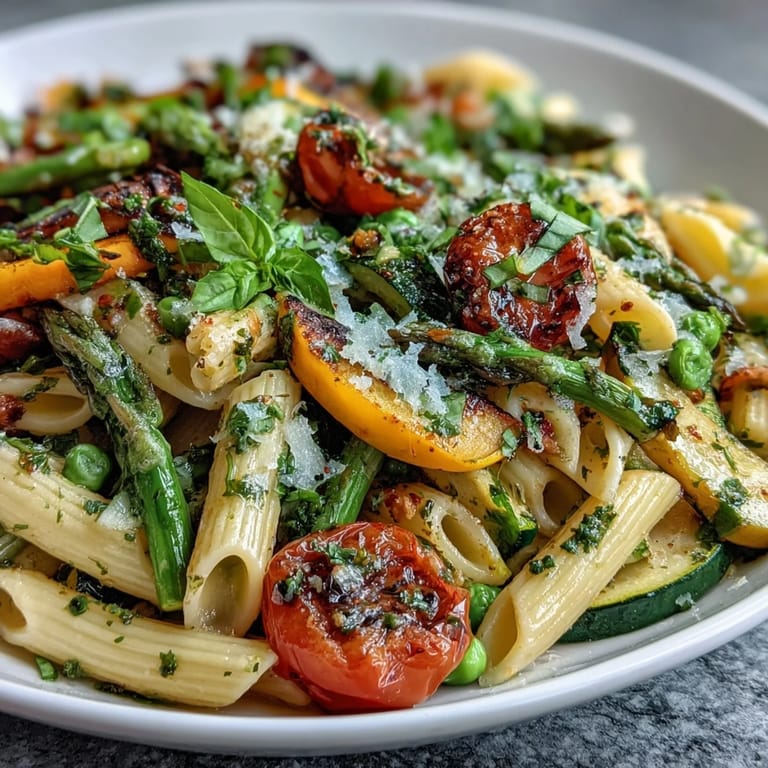
 The first time I tossed together a Spring Pasta Primavera was on a whim after spotting fresh zucchini and basil at the Saturday market, their scent practically begging for something light and colorful. The air was thick with anticipation of rain, and I remember the gentle sound of pots simmering in the kitchen while cherry tomatoes tumbled across my counter. There was an energy in the room, maybe because I knew something bright was about to land on the table. Cooking felt playful as I chopped and stirred, not overthinking but just letting the veggies shine. That evening, the dish turned out to be more than a meal—it brought spring inside, right where we needed it most.
I once made this pasta for a casual midweek dinner when my cousin popped over unexpected, and the kitchen filled up with laughter as I frantically sliced squash with one eye on the boiling pot. Somehow, it felt like we were inventing the recipe together, tossing in extra peas and debating if cherry tomatoes were optional (they’re not). We toasted with glasses of crisp white wine, and even my cousin, a reluctant veggie eater, went back for seconds. The moment was chaotic in the best way—proof that good food thrives in the midst of happy confusion. Now, whenever I cook this primavera, I remember how sharing it turned a normal night into something celebratory.
Ingredients
- Pasta: Choose penne or farfalle; I’ve found that short shapes grab the sauce and vegetables perfectly, and sturdy pasta means nobody ends up eating mush.
- Zucchini: It’s the springtime star, tender yet firm when sliced into half-moons; don’t crowd the pan or it’ll steam instead of sauté.
- Yellow Squash: Its butter-yellow hue brightens the plate, and keeps its subtle flavor if you don’t overcook it.
- Asparagus: Trim it generously—woody ends sneak up if you’re not diligent; cut pieces evenly so they cook at the same rate.
- Cherry Tomatoes: The juiciness softens when heated, mingling with pasta water for a simple sauce—halve them so they burst and flavor everything.
- Red Bell Pepper: Adds crunch and a sweet layer; slicing thin helps it cook through without overpowering.
- Peas: I toss in frozen peas straight from the freezer—no need to thaw, they brighten up quickly.
- Garlic: Three cloves seems bold but melts into a gentle warmth; mince it fine for even distribution.
- Shallot: One small shallot makes the base irresistibly aromatic—be careful not to burn it, just cook until fragrant.
- Basil: Chopped fresh basil gives a herbal lift; fold in at the end so it doesn’t wilt away.
- Parsley: A couple tablespoons snipped fresh sharpens the flavor balance, keeping things light.
- Lemon Zest & Juice: Zesting before juicing saves time—both brighten the dish without overpowering.
- Olive Oil: Extra-virgin works best—use part to sauté, and drizzle the rest for glossy finish.
- Parmesan Cheese: Grate it finely so it melts smoothly; plus, extra for topping turns it into comfort food.
- Salt & Pepper: Season generously, but taste as you go—the veggies need just enough to pop.
- Red Pepper Flakes: Optional for heat; add a pinch if you love a hint of spice.
Tired of Takeout? 🥡
Get 10 meals you can make faster than delivery arrives. Seriously.
One email. No spam. Unsubscribe anytime.
Instructions
- Cook the Pasta:
- Fill a big pot with salted water and bring it to a rapid boil, listening for the cheerful clatter when you drop in the pasta. Stir occasionally; once the pasta is just al dente, scoop out some of the cooking water—drain and set it aside.
- Sauté Aromatics:
- Heat olive oil in a wide skillet; when bubbles appear, toss in shallot and garlic. Wait for the smell to bloom, then keep an eye out so nothing browns.
- Add Spring Vegetables:
- Slide zucchini, squash, asparagus, and bell pepper into the pan; stir them until their colors turn bright and edges begin to soften. Don’t rush—they need a few minutes to give up their rawness, but not so long they lose their crunch.
- Mix in Tomatoes and Peas:
- Stir in halved cherry tomatoes and peas, letting their juices mingle as the tomatoes soften. You’ll notice things becoming saucy, the peas going brilliant green.
- Combine Pasta & Veggies:
- Add cooked pasta to the skillet, tossing everything gently so each bite gets its share of vegetable goodness. Use a wooden spoon or tongs for best control.
- Finish with Herbs & Lemon:
- Pour in the reserved pasta water, scatter lemon zest, lemon juice, chopped basil, and parsley, then drizzle a bit more olive oil. Season with salt, pepper, and red pepper flakes—taste and tweak to your liking.
- Fold in Parmesan & Serve:
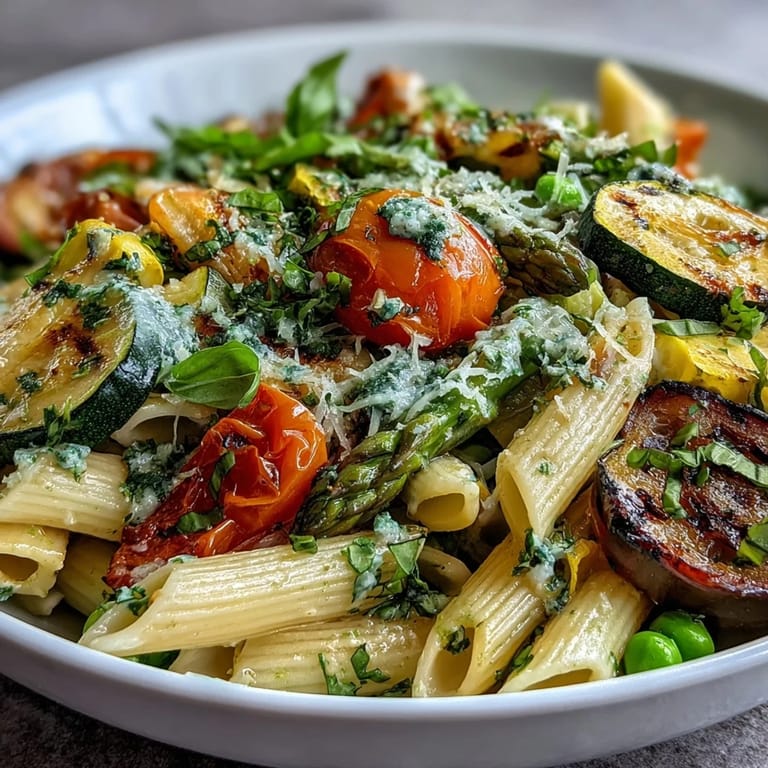
- Turn off the heat, sprinkle over the Parmesan, and gently stir—everything should be creamy but not heavy. Serve soon, with extra Parmesan and fresh herbs for garnish if you like.
 Pin It
 This primavera found its way into a birthday lunch last spring, where the table overflowed with friends and bouquets of peonies. Somehow, the crispness of the asparagus and the tang of lemon became the taste of celebration. It was the kind of meal where conversation paused just long enough for someone to sigh, 'Wow, this is good.' Food and laughter lingered well past dessert; I felt grateful for the little bit of sunshine indoors.
How to Make It Your Own
Experimenting in the kitchen taught me that primavera is wonderfully forgiving; swapping vegetables or herbs lets you tailor it to the season or your fridge contents. Some nights I throw in snap peas for crunch or baby spinach for color, and the pasta still shines. There’s a joy in seeing everyone’s bowls look just a little different—each bite somehow personal. It’s also easy to make vegan with the right cheese switch, and that freedom means nobody misses out at the table.
What Pairs Well with Spring Pasta
I found a glass of chilled Sauvignon Blanc cuts through the richness perfectly, but sparkling water with a squeeze of lemon gives a lighter touch. Crusty bread, torn and dipped into any leftover sauce, feels just right for a casual meal. Even a simply dressed salad becomes piquant when paired with the briny Parmesan and fresh herbs.
Serve and Store Without Fuss
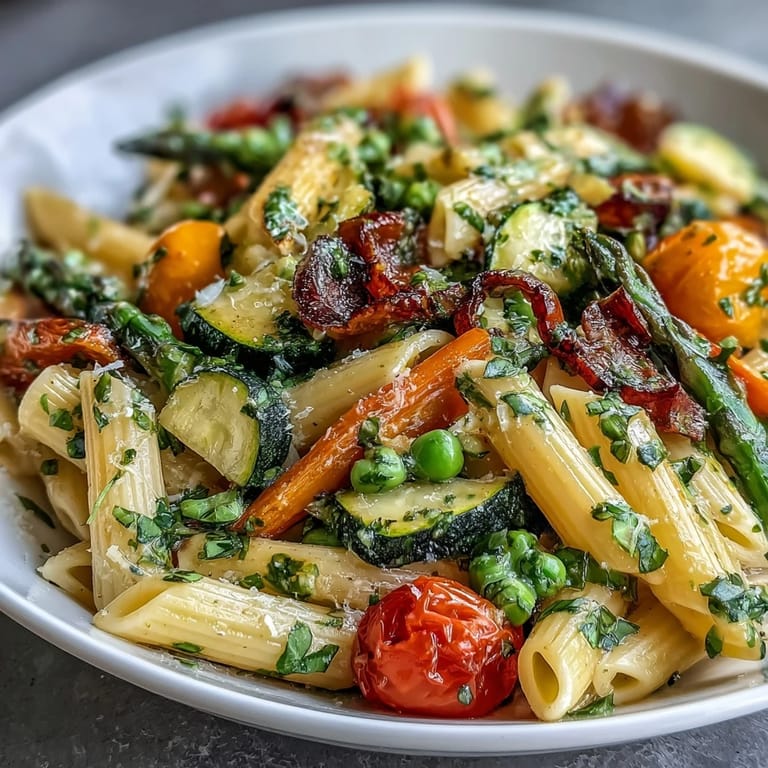
Leftovers can be revived with a splash of extra olive oil and a quick toss in a skillet, making lunch the next day almost as vibrant as dinner. I promise, this dish holds up remarkably well in the fridge, though the basil might lose its punch after a day. For serving, I love piling it into a big shallow bowl, letting every color shine.
- If you reheat, add just a touch of water to keep things saucy.
- Don’t forget extra Parmesan—it’s worth it.
- Basil and parsley sprinkled just before serving bring the freshest flavor.
 Pin It
 With every spring, I look forward to making this bright pasta again and sharing it. There’s always room at the table for another bowl or another story.
Your Questions Answered
- → Can I use other vegetables?
Yes, substitute or add spring veggies like snap peas, baby spinach, or artichokes according to preference.
- → What pasta shapes work best?
Penne, farfalle, or any short pasta holds the sauce and vegetables well for optimal texture and flavor.
- → Is there a vegan option?
Skip Parmesan cheese or use a plant-based alternative to make the dish vegan-friendly without affecting taste.
- → Can I make this ahead of time?
Prepare veggies and sauce in advance; toss with freshly cooked pasta just before serving for best results.
- → Which herbs add the most flavor?
Fresh basil and parsley provide brightness, while a hint of lemon zest enhances the spring essence beautifully.
- → What wine pairs well with this dish?
A crisp Pinot Grigio or Sauvignon Blanc complements the fresh vegetables and lemony notes perfectly.